Records that outlive the systems they came from
Coming soonSeven years from now the server is gone, the vendor changed, and a regulator wants the 2026 records. Vault holds them: locked at enrollment, searchable the whole term, and destroyed with a certificate when the term ends.
Compliance retention is its own job
Backup brings a system back. Retention answers a question years after the system is gone. Using one for the other means paying to store everything and still missing the record you were asked for. Every MSP we talk to is carrying an archive nobody can defend, and quietly hoping the request never comes.
Retention tied to a subscription you might cancel
An archive that dies with the backup contract is not a compliance answer.
Storage that quietly compounds
Keeping everything because deletion feels risky turns into a bill you cannot defend.
Deletion with no proof
When a retention period ends, you need to show the data is gone.
A separate custody lifecycle, on purpose
Locked when it goes in
Enrolment is an explicit, audited operation with a stated term. Once enrolled, no console action, administrator, or attacker shortens it.
Standalone by design
Vault accepts records from Microsoft 365 Backup, BCDR, File Backup, or an external source, and holds them under its own subscription. Cancel everything else and the archive still stands until its date.
Search, export, legal hold
Archives stay usable for the whole term. Pull exactly what a request demands, and place a hold that outranks the schedule when litigation arrives.
Certified destruction
When the term ends, destruction is deliberate and documented, closing with a signed certificate your client can file. It outlives the data it certifies.
Prepaid and predictable
Fixed terms bought up front and priced as an archive. You quote the retention obligation once and it stays quoted.
Your region, on the record
A named selection, confirmed before the first record lands. Where you put it is where it stays.
What Vault holds, and on what terms
| Source | What can be enrolled | Held as |
|---|---|---|
| Microsoft 365 Backup |
| Immutable objects with their manifests, searchable for the term |
| BCDR |
| Immutable objects with verification evidence attached |
| File Backup |
| Immutable objects with their metadata |
| External sources |
| Immutable objects with a stated custody record |
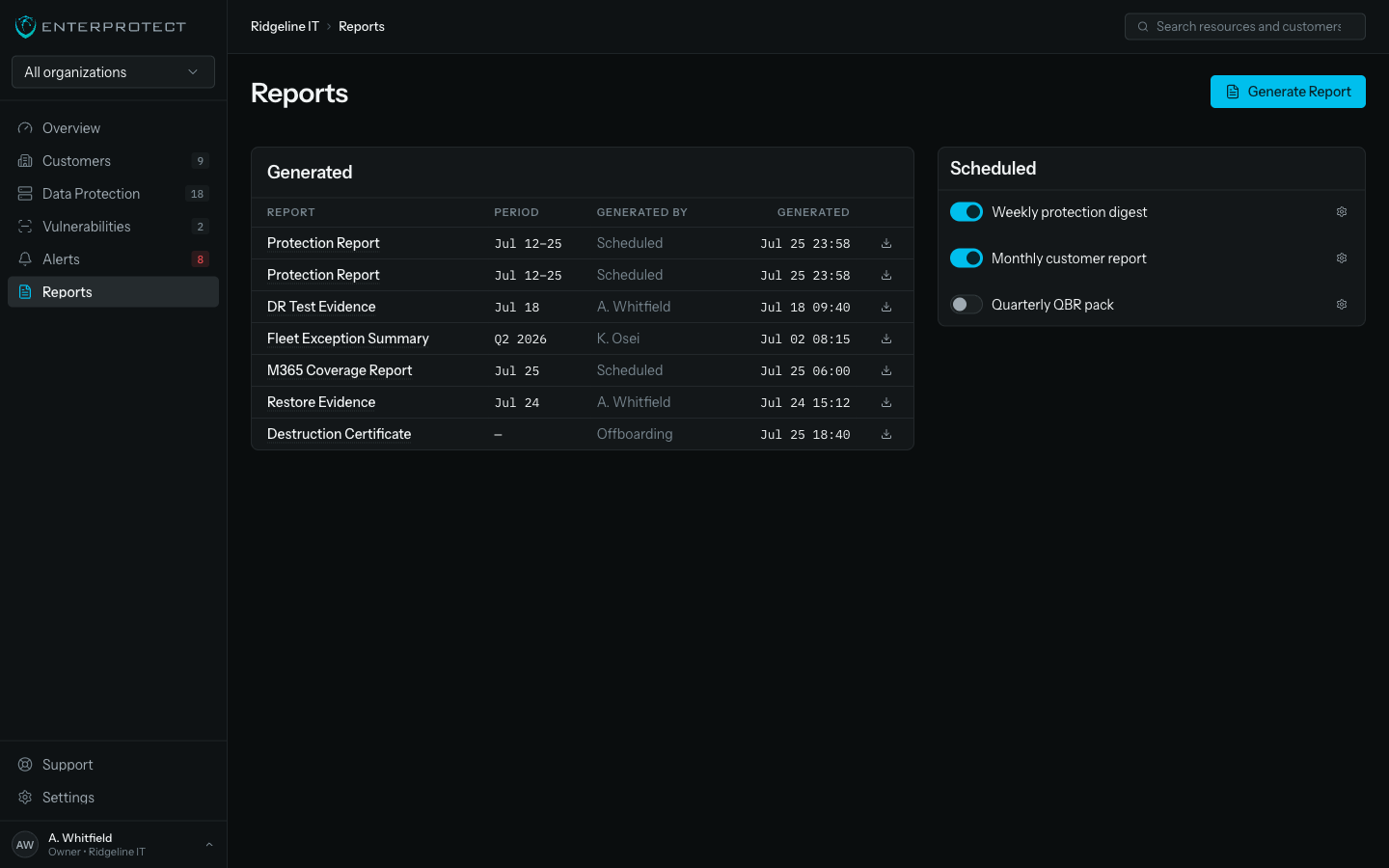
Evidence lives with the rest of your reporting
Vault holds, exports, and destruction certificates land in the same reports surface as everything else.
Three steps to a retention answer you can defend
Define
Name the cohort and the obligation behind it: the contracts, the statutory mail, the regulated records, and the years they owe.
Enroll
Move the records in. The term locks, the region is confirmed, and the operation lands in the audit trail.
Answer
Search and export whenever the question comes, then close the term with a certificate when it expires.
The request arrives after the system is gone
Requests for seven-year-old records come during an audit, a lawsuit, or a dispute. The answer is in an archive built for it, or nowhere. Build it once and the request becomes an afternoon.
What we commit to
- An enrolled term cannot be shortened by us, by you, or by anyone who steals a session.
- Vault holds its records without requiring any other EnterProtect subscription.
- Every destruction closes with a signed certificate that outlives the data.
Questions buyers ask
Why not just set a long retention on the backup?
Because backup retention lives and dies with the backup subscription, changes when a policy changes, and is priced to grow forever. A compliance obligation needs a fixed term, a custody record, and proof of destruction. That is a different product, so we built one.
What happens if I stop paying for backup?
Vault holds its records to the end of their enrolled term regardless. It carries its own subscription and does not require an active BCDR, Microsoft 365, or File Backup subscription to keep what it already holds.
Can anyone shorten a term once it starts?
No. Not you, not us, not an attacker with a stolen session. The lock is the product, and shortening it is not an operation the system offers.
What proves the data was destroyed?
A signed destruction certificate issued when disposition runs. It outlives the data it certifies, and your client can file it against the obligation that required the retention in the first place.
Where does the data physically sit?
In the region you select at enrollment, confirmed before the first record lands. Residency is a named selection on the record, not a footnote in a subprocessor list.
Can I search it years later without restoring everything?
Yes. Archives stay searchable for the whole term. You export exactly what a request demands and place a legal hold that outranks the schedule when litigation arrives.